Beef Bourguignon, probably the best recipe in the world
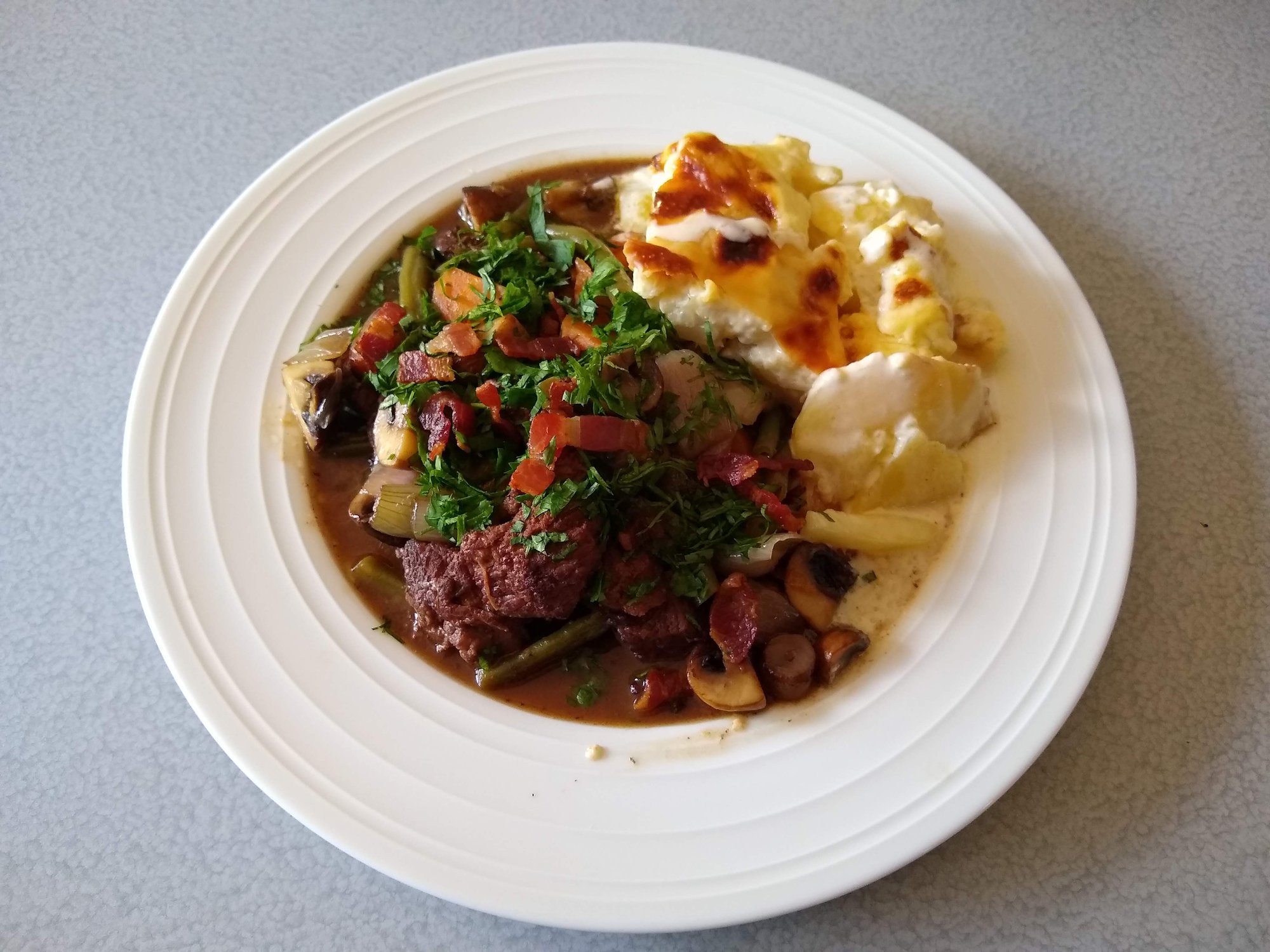
Beef bourguignon is essentially a beef stew, developed over years and drawing inspiration from Thomas Keller and Julia Child. It's a two-day process requiring overnight marination. The key technique is using muslin to separate meat from vegetables, enabling a perfectly clean gravy without the hassle of trying to pick all the bits of vegetables out.
Day One
The Beef
- Approximately 200g per person (1kg for five people)
- Chuck or short rib preferred; supermarket stewing steak is acceptable
- Cut into 1–2 inch chunks
The Red Wine Reduction
- 1 bottle red wine (Cabernet Sauvignon, Malbec, or Chianti)
- 2 medium carrots
- 2 medium onions
- 2 celery sticks
- 3–4 bay leaves
- 2 good-sized sprigs of thyme
- Olive oil
- Roughly chop the vegetables; sweat in olive oil for 5 minutes on medium-high heat until the onions colour.
- Add the bay leaves and thyme; fry for 1 minute.
- Pour in the wine; bring to the boil.
- Reduce to a brisk simmer; cook until reduced by half.
- Strain the liquid into a clean pan; refrigerate the vegetables separately.
- Combine the meat with the wine reduction in a bowl or bag; refrigerate for 8–16 hours.
Stocks
Beef bourguignon is traditionally made with beef or veal stock. The recommendation here is one-third beef with two-thirds chicken stock.
Day Two
Equipment Needed
- Muslin sheet and string or cotton
- Large frying pan
- Large casserole (oven-safe, heat-appropriate)
- Heat diffuser (optional)
Garnish Ingredients
- 200g smoked streaky bacon, dry cured preferred
- 200g peeled shallots
- 100g baby chestnut mushrooms
- 1–2 tablespoons finely chopped flat leaf parsley
- Fresh vegetables (carrots, green beans, broad beans, peas)
Prepare the Garnishes
- Chop mushrooms into halves or quarters.
- Chop shallots into similar chunks or leave whole if small.
- Cut bacon crosswise into ~0.5cm strips.
- Fry bacon on medium heat until crispy; remove to kitchen paper.
- Using the bacon fat (add olive oil if needed), fry mushrooms and shallots gently until cooked; set aside.
Drain and Dry the Beef
- Strain the marinade into the casserole.
- Let the meat drain for 30 minutes in a sieve, stirring occasionally.
- Pat the meat dry on paper towels.
- Add the reserved vegetables to the casserole.
Frying the Beef
- Spread the meat on a plate; sprinkle with flour; toss to coat evenly.
- Spread muslin on another plate.
- Heat the pan until very hot but not smoking; coat with olive oil.
- Fry the meat in small batches until well browned (don't crowd the pan).
- Transfer each batch to the muslin-covered plate.
Stewing
- Loosely tie the beef in the muslin, ensuring the chunks stay contained.
- Place the muslin bag on the vegetables; pour stock to reach the top of the bag (add water if needed).
- Bring to the boil; immediately reduce to the lowest simmer; cover.
- Use a heat diffuser if available.
- Alternative: Cook in the oven at 160°C (150°C fan) / 325°F / gas mark 3.
- Cook for approximately 2.5 hours.
- The beef should be soft but not falling apart.
Finishing
- Carefully lift the muslin bag onto a deep plate or bowl.
- Strain the gravy into a clean saucepan; squeeze the muslin for all the liquid.
- Discard the strained vegetables.
- Reduce the gravy as needed (consistency of single cream).
- Remove the meat from the muslin; add to the gravy with any seepage.
- Submerge the beef chunks; cover until serving.
Final Assembly
- Cook the fresh vegetables until just done.
- Combine gravy, freshly cooked vegetables, and beef.
- Add the mushrooms and shallots (or serve separately).
- Heat until piping hot.
- Serve sprinkled with crispy bacon and parsley.
- Accompany with Dauphinoise potatoes, steamed new potatoes, noodles, or chips.
For a vegetarian or vegan version, consider using plant-based burgers, vegetarian bacon (facon), and vegetable stock.